हर सप्ताह घंटे बचाएं
अपने बैंक स्टेटमेंट (PDF) को Excel, CSV या OFX में बदलें, बिना डेटा दोबारा हाथ से दर्ज किए।
लोन आवेदन में बैंक स्टेटमेंट से आय के जमा होने, मौजूदा भुगतान, बैलेंस और लौटे हुए लेनदेन की जाँच की जा सकती है। लेकिन हर जमा आय नहीं है, और कोई एक बैलेंस या CIBIL स्कोर लोन मंज़ूरी की गारंटी नहीं देता। ऋणदाता की दस्तावेज़ सूची से शुरुआत करें, माँगी गई अवधि के मूल स्टेटमेंट जुटाएँ और असामान्य प्रविष्टियों के प्रमाण तैयार रखें।
यह गाइड भारत में व्यक्तिगत और व्यवसायिक लोन के लिए रिकॉर्ड तैयार करने में मदद करती है। इसमें दिए गए संकेत समीक्षा के विषय हैं, किसी बैंक का स्वीकृति मॉडल या आपकी पात्रता का आकलन नहीं।

कितने महीने का बैंक स्टेटमेंट चाहिए?
अवधि लोन के प्रकार, आवेदक और ऋणदाता पर निर्भर करती है। उदाहरण के लिए, HDFC Bank की पर्सनल लोन दस्तावेज़ सूची पिछले तीन महीने के बैंक स्टेटमेंट का उल्लेख करती है। इसे सभी होम, बिजनेस या पर्सनल लोन का नियम न मानें। आवेदन के समय उसी उत्पाद की नवीनतम सूची और बैंक से मिली माँग लागू होगी।
बैंक से ये बातें स्पष्ट करें:
- कौन-से खाते चाहिए: वेतन खाता, व्यवसाय खाता या अन्य घोषित खाते?
- पूरी तारीख सीमा क्या है, और क्या चालू महीने की अतिरिक्त जानकारी चाहिए?
- डाउनलोड किया हुआ मूल PDF स्वीकार्य है या बैंक से प्रमाणित प्रति चाहिए?
- आय के साथ कौन-से प्रमाण चाहिए: वेतन पर्ची, ITR, कारोबार के रिकॉर्ड या अन्य दस्तावेज़?
- दस्तावेज़ किस अधिकृत पोर्टल या शाखा में जमा करने हैं?
बीच के पन्ने या निष्क्रिय महीने हटाने से अवधि अधूरी हो सकती है। एक से अधिक खातों के रिकॉर्ड माँगे गए हों तो उन्हें अलग पहचान के साथ दें।
CIBIL रिपोर्ट और बैंक स्टेटमेंट अलग जानकारी देते हैं
CIBIL की आधिकारिक जानकारी के अनुसार क्रेडिट रिपोर्ट में ऋण और क्रेडिट कार्ड का इतिहास होता है; उसमें बचत, निवेश या फिक्स्ड डिपॉज़िट का विवरण नहीं होता। बैंक स्टेटमेंट खाते के वास्तविक जमा और निकासी दिखाता है। दोनों को एक-दूसरे का विकल्प न मानें।
एक खाते में EMI न दिखने का मतलब यह नहीं कि कोई अन्य ऋण नहीं है। भुगतान दूसरे खाते से हो सकता है। इसी तरह स्टेटमेंट की एक रिटर्न फीस से क्रेडिट रिपोर्ट में दर्ज स्थिति का निष्कर्ष नहीं निकाला जा सकता। अंतर दिखे तो संबंधित बैंक या ऋणदाता से स्पष्टीकरण लें।
बैंक स्टेटमेंट में किन संकेतों की समीक्षा हो सकती है?
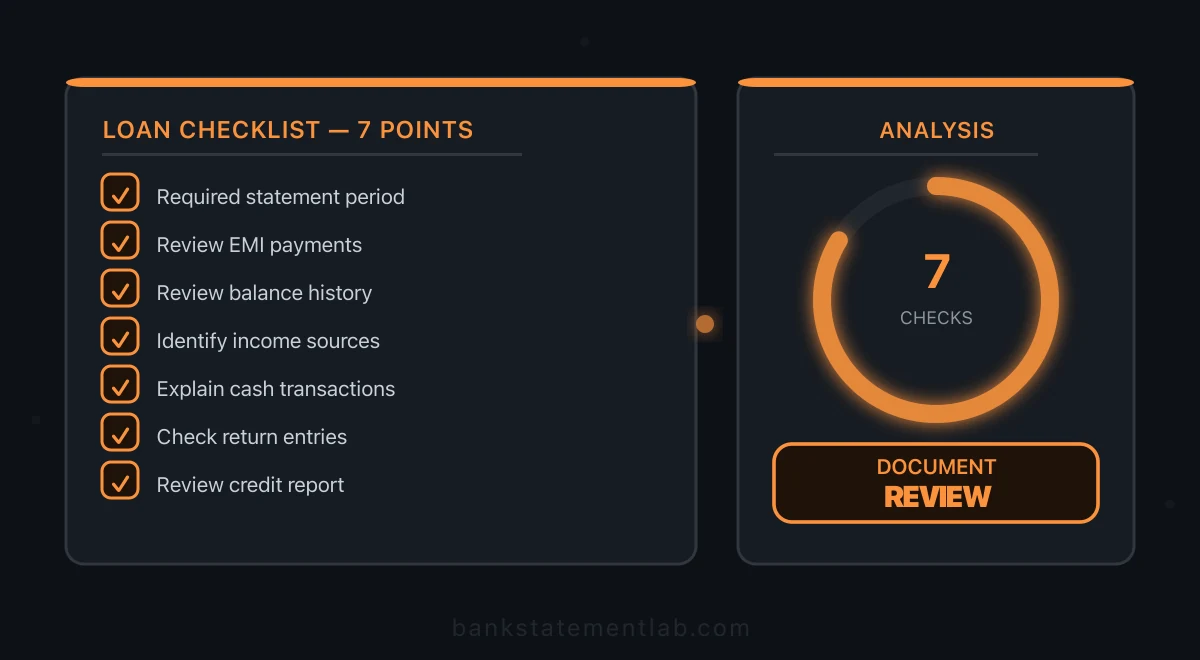
नीचे सात उपयोगी जाँच क्षेत्र हैं। ये सार्वभौमिक पास/फेल मानदंड नहीं हैं।
| संकेत | स्टेटमेंट में क्या देखें | साथ में क्या समझाएँ या जाँचें |
|---|---|---|
| नियमित आय | वेतन या ग्राहक भुगतान की तारीख और रकम | वेतन पर्ची, चालान और अन्य आय रिकॉर्ड से संबंध |
| मौजूदा भुगतान | EMI, कार्ड भुगतान और नियमित डेबिट | अन्य खातों से भुगतान और बकाया ऋण की जानकारी |
| बैलेंस | दैनिक या अवधि के शुरुआती व अंतिम बैलेंस | केवल महीने के अंतिम दिन की राशि पूरी तस्वीर नहीं देती |
| लौटे हुए लेनदेन | रिटर्न, रिवर्सल और संबंधित शुल्क | कारण, दोबारा भुगतान और समाधान का प्रमाण |
| बड़े या असामान्य जमा | नकद, एकमुश्त ट्रांसफर, रिफंड | पैसे का वास्तविक स्रोत और सहायक दस्तावेज़ |
| खर्च का समय | आय आने और भुगतान जाने का अंतर | मौसमी खर्च, वार्षिक भुगतान या अस्थायी परिस्थिति |
| रिकॉर्ड की निरंतरता | सभी पन्ने, पूरी अवधि और खाते की पहचान | गायब अवधि, दोहराए पन्ने या गलत खाते की प्रति |
सभी credits को मासिक आय न मानें
काल्पनिक उदाहरण: एक महीने में खाते में ये तीन जमा हुए:
| जमा का स्रोत | रकम | समीक्षा में अर्थ |
|---|---|---|
| वेतन | ₹50,000 | वेतन पर्ची से मिलाने योग्य आय |
| अपने दूसरे खाते से ट्रांसफर | ₹20,000 | उसी पैसे का स्थानांतरण; नई आय नहीं |
| पहले की खरीद का रिफंड | ₹2,000 | खर्च की वापसी; वेतन नहीं |
| कुल बैंक credits | ₹72,000 | ₹72,000 की मासिक आय का प्रमाण नहीं |
इस उदाहरण में वेतन ₹50,000 है। ऋणदाता कौन-सी आय और किस आधार पर स्वीकार करेगा, यह उसके नियमों पर निर्भर है। व्यवसाय में ग्राहक का जमा भी अपने आप लाभ नहीं बनता: लागत, कर, उधार और लेखांकन रिकॉर्ड अलग से देखने पड़ सकते हैं।
EMI अनुपात समझें, काल्पनिक पात्रता सीमा न बनाएँ
FOIR जैसे अनुपात मासिक दायित्वों और स्वीकार की गई आय के संबंध को देखने के लिए इस्तेमाल हो सकते हैं। गणना में शामिल दायित्व, प्रस्तावित लोन की EMI और आय की परिभाषा ऋणदाता से स्पष्ट करें। सिर्फ दिखाई देने वाली EMI जोड़कर किसी ऑनलाइन सीमा से तुलना करना मंज़ूरी का भरोसेमंद अनुमान नहीं है।
उदाहरणतः ₹50,000 आय और ₹10,000 मौजूदा EMI का साधारण अनुपात 20% है। यह केवल अंकगणित है; इसमें नए लोन का भुगतान या दूसरे दायित्व शामिल नहीं हैं। इसे बैंक द्वारा स्वीकार किया गया FOIR न कहें।
नकद लेनदेन और कम बैलेंस का संदर्भ दें
नकद जमा होना अपने आप गलत नहीं है। नकद बिक्री वाले व्यवसाय में उसका बिक्री रिकॉर्ड से संबंध दिखाना उपयोगी है। परिवार से मिला पैसा, संपत्ति की बिक्री या अन्य एकमुश्त जमा हो तो उसके वास्तविक स्वरूप का प्रमाण रखें। जानकारी उपलब्ध न हो तो अनुमान से उसे वेतन या कारोबार की नियमित आय न लिखें।
इसी तरह कम अंतिम बैलेंस किसी एक बड़े भुगतान से प्रभावित हो सकता है। किसी आवेदन को बेहतर दिखाने के लिए अस्थायी उधार लेकर रकम घुमाने, लेनदेन छिपाने या केवल अनुकूल पन्ने चुनने से बचें। पूरा और समझने योग्य रिकॉर्ड प्रस्तुत करें।

लोन आवेदन के लिए स्टेटमेंट तैयार करने के छह चरण
1. मूल दस्तावेज़ और अवधि सुरक्षित रखें
बैंक के अधिकृत पोर्टल से माँगी गई अवधि का स्टेटमेंट लें। फ़ाइल में खाते की पहचान, सभी पन्ने और तारीख सीमा जाँचें। डाउनलोड की हुई मूल प्रति अलग रखें; नोट्स उसमें बदलाव करके न जोड़ें।
2. आय के प्रमाण जोड़ें
हर नियमित जमा को वेतन पर्ची या संबंधित आय रिकॉर्ड से मिलाएँ। अंतर हो तो कारण दर्ज करें, जैसे वेतन की तारीख बदली या बोनस आया। आय सिद्ध करने के लिए सिर्फ narration में दिखे शब्द पर निर्भर न रहें।
3. दायित्वों की पूरी सूची बनाएँ
ऋणदाता द्वारा माँगी गई ऋण और कार्ड संबंधी जानकारी जुटाएँ। किसी बंद लोन का भुगतान अभी दिख रहा हो तो closure record या अंतिम स्टेटमेंट रखें। केवल आवेदन के लिए ऋण बंद करने का निर्णय इस लेख के आधार पर न लें।
4. अपवादों के लिए अलग नोट बनाएँ
नोट में तारीख, रकम, बैंक का संदर्भ, वास्तविक कारण और प्रमाण का नाम लिखें। उदाहरण: “₹2,000 खरीद का रिफंड; मूल डेबिट और विक्रेता की पुष्टि संलग्न।” अज्ञात कारण को तथ्य की तरह न लिखें; बैंक से जाँच लंबित हो तो वही बताएँ।
5. काम करने के लिए Excel प्रति बनाएँ, यदि ज़रूरी हो
बहुत सारे लेनदेन होने पर बैंक स्टेटमेंट PDF को Excel में बदलना खोज और तुलना में मदद कर सकता है। मूल PDF अलग रखें। तारीख, रकम, डेबिट/क्रेडिट, पन्ने और उपलब्ध बैलेंस से निकाले गए डेटा को मिलाएँ।
एक ही खाते और मुद्रा की पूरी अवधि में शुरुआती बैलेंस + credits − debits = अंतिम बैलेंस जाँचें। अंतर हो तो छूटा पन्ना, गलत चिह्न, दोहराई गई पंक्ति या अलग balance definition देखें। यह डेटा की जाँच है, दस्तावेज़ की प्रामाणिकता या लोन स्वीकृति का प्रमाण नहीं।
खर्च के प्रकार समझने के लिए ट्रांजैक्शन कैटेगरी बनाने की विधि उपयोगी है। अपने बनाए वर्गीकरण को बैंक की आय-पात्रता गणना के रूप में पेश न करें।
6. मूल स्टेटमेंट सुरक्षित चैनल से जमा करें
ऋणदाता का आधिकारिक पता या पोर्टल सत्यापित करें। पासवर्ड, OTP या UPI PIN किसी विश्लेषण टूल को न दें। अपनी Excel समीक्षा को मूल बैंक स्टेटमेंट का स्थानापन्न तभी मानें जब ऋणदाता स्पष्ट रूप से स्वीकार करे।
BankStatementLab कहाँ मदद करता है?
BankStatementLab PDF और समर्थित छवियों से लेनदेन निकालकर XLSX, CSV या JSON में काम करने योग्य डेटा देता है। इससे आय के जमा, EMI और प्रश्न वाले लेनदेन को Excel में छाँटा जा सकता है। यह CIBIL स्कोर नहीं निकालता, दस्तावेज़ प्रमाणित नहीं करता और लोन मंज़ूरी का निर्णय नहीं देता।
अपलोड से पहले सेवा की गोपनीयता और डेटा रखने की शर्तें जाँचें। निकाले गए डेटा को मूल रिकॉर्ड से सत्यापित करें। स्टेटमेंट से समीक्षा के लिए Excel डेटा निकालें →
अक्सर पूछे जाने वाले सवाल
लोन के लिए तीन महीने का बैंक स्टेटमेंट पर्याप्त है?
यह ऋणदाता और लोन उत्पाद पर निर्भर है। कुछ दस्तावेज़ सूचियों में तीन महीने दिए हैं, लेकिन अपने आवेदन की माँगी गई अवधि, खाते और फ़ाइल स्वरूप की पुष्टि करें।
क्या खाते के सभी जमा को आय मान सकते हैं?
नहीं। अपने खातों के बीच ट्रांसफर, रिफंड और उधार मिले पैसे को नियमित आय से अलग पहचानें। आय के समर्थन में संबंधित दस्तावेज़ रखें।
क्या अच्छा CIBIL स्कोर लोन की गारंटी देता है?
नहीं। ऋणदाता आय, दायित्व, दस्तावेज़ और अपनी पात्रता नीति भी देख सकता है। बैंक स्टेटमेंट से कोई सार्वभौमिक मंज़ूरी स्कोर नहीं निकाला जा सकता।
क्या Excel में बदला हुआ स्टेटमेंट बैंक को दे सकते हैं?
Excel प्रति अपनी समीक्षा में मदद करती है। मूल बैंक स्टेटमेंट सुरक्षित रखें और वही स्वरूप जमा करें जो ऋणदाता माँगता है; परिवर्तित फ़ाइल को अपने आप स्वीकार्य विकल्प न मानें।
हर सप्ताह घंटे बचाएं
अपने बैंक स्टेटमेंट (PDF) को Excel, CSV या OFX में बदलें, बिना डेटा दोबारा हाथ से दर्ज किए।